Short answer
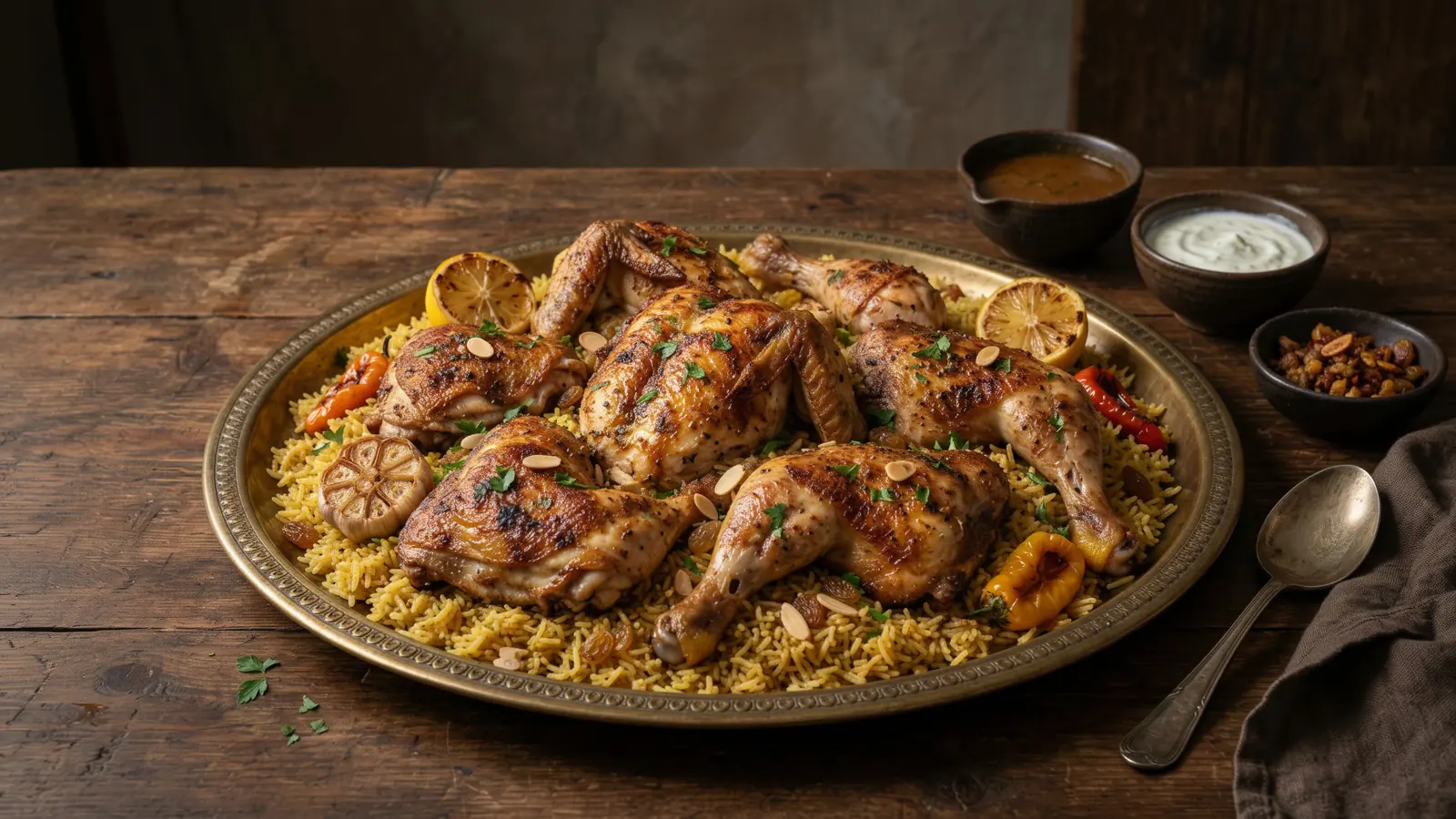
Chicken mandi is a Yemeni dish of tender, smoky chicken served on fragrant long-grain rice cooked in the chicken’s juices. It is mildly spiced and cooked with smoke, which sets it apart from layered, heavily spiced biryani.
Chicken mandi is a Yemeni dish of tender, smoky chicken served on fragrant long-grain rice cooked in the chicken’s own juices. Chicken mandi differs from biryani because it is mildly spiced, cooked with smoke and served with a chili sauce on the side.
What is chicken mandi?
Chicken mandi is a rice and chicken dish from Hadramawt in Yemen, now eaten across the Arabian Peninsula and in Indian cities such as Hyderabad. A whole or half chicken is cooked until tender and placed on a platter of rice.
The name mandi is generally linked to an Arabic word for dew, referring to the moist, tender meat. Mandi is usually served on a large shared platter, and it is closely related to lamb mandi, which uses lamb instead of chicken.
What are the ingredients?
The ingredients are chicken, long-grain rice, a warm spice mix, garlic, onion, ghee or oil and salt, with toasted nuts and raisins for garnish. The spice mix is the main flavor.
- Chicken: a whole bird cut into pieces, or bone-in legs and thighs.
- Rice: long-grain, often basmati.
- Spices: cardamom, cloves, cumin, coriander, black pepper, turmeric, dried lime, often as a mandi or hawaij blend.
- Aromatics: garlic, onion, bay leaf.
- Garnish: toasted almonds, raisins, fried onions.
- Sauce: a tomato-chili sauce called daqqus, on the side.
How is chicken mandi traditionally cooked?
Chicken mandi is traditionally hung in a sealed underground oven over a tray of rice, so that juices drip onto the rice while smoke from charcoal flavors both. The covered pit cooks the chicken slowly and evenly.
The oven, often called a tannour or taboon, is lit with wood or charcoal and then covered. The result is tender chicken with a faint smoky taste and rice that is full of flavor. Restaurants that do not have a pit use a closed oven, grill or pot with a smoke step to mimic it.
How do you make chicken mandi at home?
Make chicken mandi at home by seasoning the chicken, roasting it in a covered pan, cooking the rice in the juices and adding a smoke step. The whole process takes about two hours.
- Mix 2 tablespoons of mandi spice mix with salt, garlic and oil and rub it over 2.5 pounds of bone-in chicken pieces. Rest 1 hour.
- Roast, covered, at 375 degrees Fahrenheit for about 40 minutes, then uncover and roast 15 minutes more until browned.
- Soak 2 cups of basmati for 30 minutes and drain.
- Cook the rice in a pot with whole spices and 3 cups of stock or water, adding the pan juices, for 12 to 15 minutes.
- For smoke, set a small heatproof bowl on the rice, place a hot charcoal piece in it, add a few drops of oil, cover tightly for 5 minutes, then remove.
- Pile the rice on a platter, place the chicken on top, and garnish.
Work in a ventilated space and remove the charcoal before serving.
How is chicken mandi different from biryani?
Chicken mandi is milder, smokier and simpler than biryani, and its chicken is cooked whole instead of being layered with rice. Biryani is South Asian and uses heavier spice, yogurt marinades and dum steaming.
| Point | Chicken mandi | Chicken biryani |
|---|---|---|
| Origin | Yemen | South Asia |
| Spice | Mild, aromatic | Medium to hot |
| Cooking | Smoked or roasted | Layered and dum-steamed |
| Rice | Cooked in chicken juices | Parboiled, then layered |
| Sides | Chili sauce, yogurt | Raita, salan |
| Serving | Large shared platter | Individual plates or a pot |
Both can be served at celebrations, and neither is a version of the other.
What do you serve with chicken mandi?
Serve chicken mandi with a spicy tomato-chili sauce, plain yogurt and a fresh salad. These sides bring heat and acidity to a mild dish.
- Daqqus (tomato and chili sauce)
- Yogurt or cucumber raita
- Tomato, cucumber and onion salad
- Lemon wedges
Which chicken pieces work best for mandi?
Bone-in, skin-on legs and thighs work best for chicken mandi, because they stay juicy during roasting and drip fat onto the rice. A whole chicken cut in half is the traditional choice.
- Whole or half chicken: the classic, best for a shared platter.
- Legs and thighs: juicy and forgiving.
- Breast: dries out easily, so cook it with the bone in and avoid overcooking.
- Boneless pieces: possible, but less flavorful and moist.
Keep the skin on during roasting, because it browns and protects the meat.
What mistakes spoil chicken mandi?
The most common mistakes are overcooking the chicken, using too much water for the rice and adding too much smoke. Mandi is meant to be mild and moist.
- Dry chicken: roast covered for most of the time and check the thickest piece, which should reach 165 degrees Fahrenheit inside.
- Soggy rice: measure the water and use the pan juices as part of it.
- Bitter smoke: use only a short smoke step of about 5 minutes.
- Too much spice: keep the blend warm and aromatic, not hot.
- No rest: let the chicken rest for 10 minutes before serving.
Is chicken mandi on the Bay Biryanis menu?
No. Chicken mandi is not named on the Bay Biryanis menu page, which lists biryanis and pulaos instead, along with curries, tandoori items and South Indian tiffins. This guide is general and does not suggest the restaurant serves mandi.
For chicken rice dishes that are on the menu, see the Hyd Chicken Dum Biryani and the Chicken Pachi Mirchi Pulao, which the menu describes as a pulao with chicken and green chili. Check the menu page here or the official website, baybiryani.com, for the current list. Opening times are on the hours and location page. This guide is independent and takes no orders.
What is the difference between mandi, kabsa and machboos?
Mandi, kabsa and machboos are related rice and meat dishes of the Arabian Peninsula that differ in origin and spice. Mandi is Yemeni and smoky, kabsa is Saudi and more spiced, and machboos is a Gulf dish often made with dried lime.
Chefs and cooks disagree about the exact borders between these dishes, and recipes overlap. A useful rule is that mandi emphasizes smoky, tender meat over mild rice, while kabsa and machboos cook the meat and rice together in a spiced, tomato-based pot.
Common questions
What does chicken mandi taste like?
Chicken mandi tastes mild, savory and slightly smoky, with warm spices such as cardamom, cumin and black pepper. The rice is soft and aromatic from the chicken fat, and a chili-tomato sauce adds heat on the side.
Is chicken mandi the same as chicken biryani?
No. Mandi is Yemeni and cooks chicken with smoke, then serves it on plain-seasoned rice. Biryani is South Asian and layers marinated chicken with spiced rice and finishes it by dum steaming.
What spices are in mandi?
Typical mandi spices include cardamom, cloves, cumin, coriander, black pepper, turmeric and dried lime, often sold as a mandi or hawaij blend. The mix is warm and aromatic rather than hot.
How do you get the smoky taste at home?
Cook the chicken in the oven, then place a small piece of hot charcoal in a heatproof bowl on the rice, drizzle a little oil over it, cover the pot tightly for a few minutes, and remove the bowl before serving.
What is served with chicken mandi?
Mandi is served with a spicy tomato-chili sauce, a yogurt dip and a fresh salad of tomato, cucumber and onion. Lemon wedges and toasted almonds or raisins on the rice are common additions.
Before you go, check the Bay Biryani guide for the current hours and the menu.
This article is general information from an independent guide, not from Bay Biryanis itself. For the store’s current details see hours and location.