Short answer
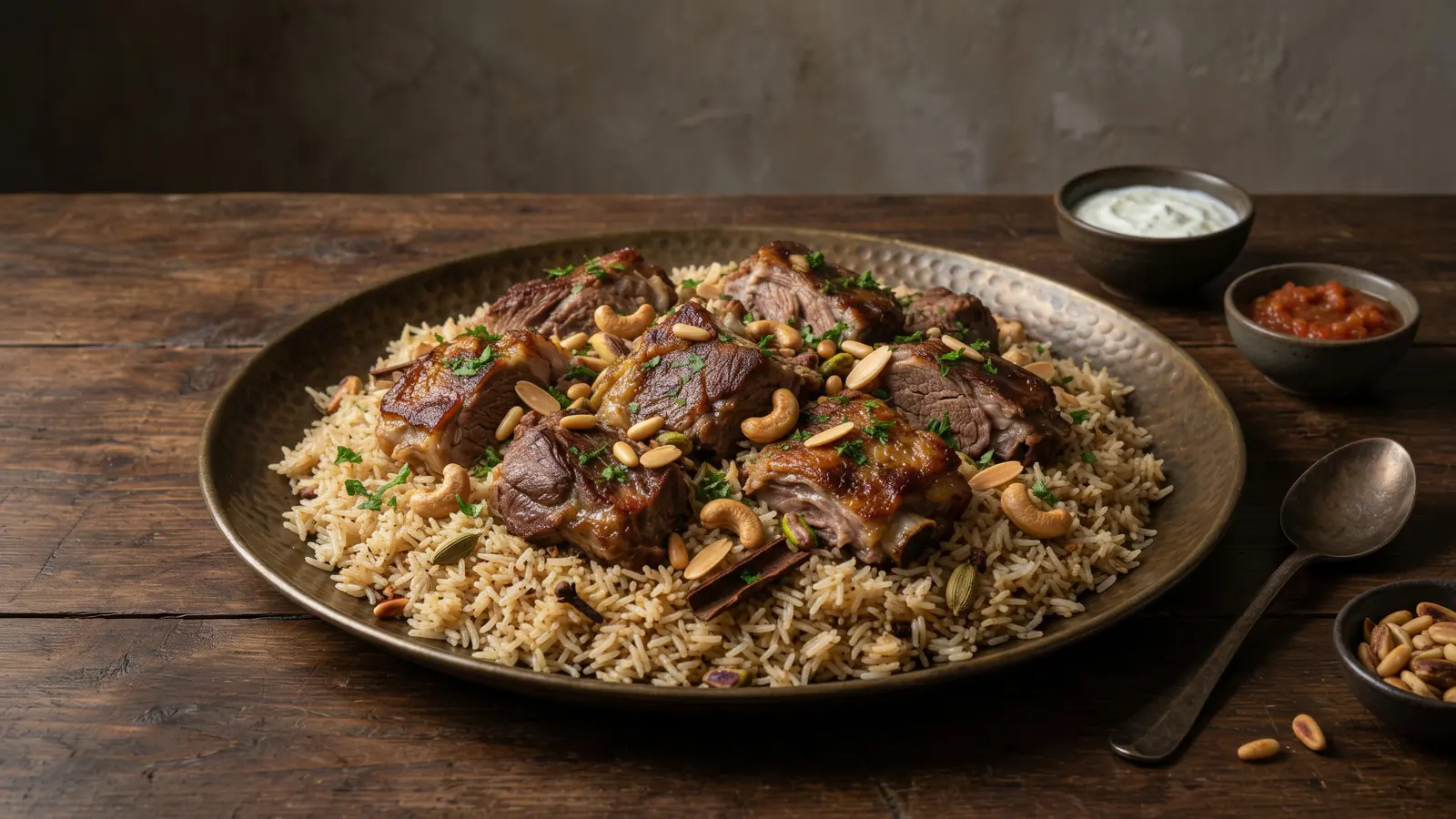
Lamb mandi is a Yemeni dish of long-grain rice served under tender lamb that has been slow-cooked, traditionally in a sealed underground oven so the meat gets a smoky flavor. It is lightly spiced and far less oily than biryani.
Lamb mandi is a dish from Yemen of long-grain rice served beneath slow-cooked lamb that is traditionally smoked in a sealed pit oven. Lamb mandi is lightly spiced and tender, and it is a different dish from biryani, which layers rice and meat with heavy spice.
What is lamb mandi?
Lamb mandi is a Yemeni rice and meat dish in which whole pieces of lamb are cooked until they fall off the bone and served over rice flavored by the meat’s juices. It comes from the Hadramawt region of Yemen and is now eaten across the Arabian Peninsula and in India, notably Hyderabad.
The dish is made for sharing. A large platter of rice is topped with the lamb, often garnished with toasted almonds, raisins or fried onions. Other meats, such as chicken, are used in similar dishes, and chicken mandi is also widely served.
How is mandi traditionally cooked?
Mandi is traditionally cooked in a tandoor-style pit oven, where the meat hangs above the rice in a sealed chamber. Fat and juices drip onto the rice below, and the closed oven fills with smoke from charcoal.
The pit, called a taboon or a tannour in some regions, is heated with wood or charcoal. The lamb is suspended on hooks or racks and the rice sits in a tray underneath. The pit is covered, and the meat cooks slowly for hours in the heat and smoke. This is what gives mandi its tender texture and faint smoky taste.
What spices and ingredients go into lamb mandi?
Lamb mandi uses whole and ground spices such as cardamom, cloves, cumin, coriander, black pepper and turmeric, plus long-grain rice, ghee or oil and salt. The mix is milder than a typical biryani masala.
- Lamb: bone-in shoulder, leg or shank.
- Rice: long-grain, often basmati.
- Spice mix: often called hawaij or mandi masala, with cardamom, cloves, cumin, coriander, black pepper, turmeric and dried lime.
- Aromatics: garlic, onion, sometimes tomato.
- Garnish: toasted almonds, raisins and fried onions.
- Sauce: a chili and tomato sauce such as daqqus, served on the side.
How is mandi different from biryani?
Mandi differs from biryani in origin, spicing, cooking method and the way rice and meat are treated. Mandi comes from Yemen, relies on smoke and slow cooking, and uses less chili, while biryani is South Asian and layers marinated meat with heavily spiced rice.
| Point | Mandi | Biryani |
|---|---|---|
| Origin | Yemen, Arabian Peninsula | South Asia |
| Spice level | Mild, aromatic | Medium to hot |
| Meat | Whole large pieces, falling off the bone | Marinated pieces, layered |
| Cooking | Smoked in a pit or sealed oven | Layered and steamed (dum) |
| Rice | Plain, cooked in meat juices | Spiced, layered |
| Sauce | Chili-tomato sauce on the side | Raita and salan |
Both are festive rice dishes, and both can be made with lamb, goat or chicken.
How do you make lamb mandi at home?
Make lamb mandi at home by rubbing lamb with spices, roasting it covered until tender, adding smoke, and cooking the rice in the lamb juices. The method takes about three hours.
- Rub 2 pounds of bone-in lamb with salt, garlic, oil and a mandi spice mix, and rest it for at least one hour.
- Roast it in a covered pan at about 325 degrees Fahrenheit for 2 to 2.5 hours, until tender.
- Soak 2 cups of basmati rice for 30 minutes and drain.
- Cook the rice in a pot with whole spices and the pan juices, using about 3 cups of water or stock, until done.
- For a smoky taste, place a piece of hot charcoal in a small heatproof bowl on the rice, add a few drops of oil, cover tightly for 5 minutes, then remove.
- Serve the rice on a platter with the lamb on top, garnished with almonds and raisins.
Use a safe, ventilated space when handling charcoal and remove it before serving.
What do you serve with lamb mandi?
Lamb mandi is served with a spicy tomato and chili sauce, a yogurt dip, and a simple salad. The sides add acidity and heat to the mild rice and rich lamb.
- Daqqus, a tomato and chili sauce
- Plain yogurt or a cucumber raita
- Salad of tomato, cucumber and onion
- Lemon wedges
Which cut of lamb is best for mandi?
Bone-in shoulder or leg is the best cut for lamb mandi, because the bone and fat keep the meat moist through hours of slow cooking. Lamb shanks and neck pieces are also used.
- Shoulder: the most forgiving cut, with a good balance of meat and fat.
- Leg: leaner and meaty, suited to a whole roast.
- Shank: rich in connective tissue, becomes very tender.
- Ribs: flavorful, but with less meat per piece.
Ask for pieces of similar size so the lamb cooks evenly, and keep some fat on, because it flavors the rice below.
What mistakes spoil lamb mandi?
The most common mistakes are cooking the lamb too fast, using too much water for the rice and skipping the rest. Mandi relies on slow, gentle heat.
- High oven heat: dries the lamb. Cook low and covered.
- Too much liquid: makes the rice soft and heavy. Measure the water.
- Over-spicing: mandi is meant to be mild and aromatic.
- Too much smoke: a few minutes is enough, or the taste turns bitter.
- No rest: let the lamb rest for 10 minutes so it stays juicy.
Is lamb mandi on the Bay Biryanis menu?
No. Lamb mandi is not on the Bay Biryanis menu page, which lists biryanis, pulaos, curries, tandoori items and South Indian tiffins, among other sections. This guide is general and does not suggest the restaurant serves mandi.
For a similar lamb rice dish, the menu lists a Lamb Fry Biryani and a Lamb Vijayawada Biryani. Check the menu page here or the official website, baybiryani.com, for the current list. Opening times are on the hours and location page. This guide is independent and takes no orders.
Is mandi popular in India?
Mandi has become popular in Hyderabad and other Indian cities in recent years, where mandi restaurants serve it alongside local biryanis. The city’s long ties with Yemen, through the Hadrami community, help explain the dish’s popularity there.
Indian versions are sometimes spicier than the Yemeni original, and some restaurants offer chicken, lamb or fish mandi. It is a general trend rather than a fixed rule, so styles vary by restaurant.
Common questions
Where does mandi come from?
Mandi comes from Hadramawt in Yemen, and it is now popular across the Arabian Peninsula and in Hyderabad, India. Its name is linked to an Arabic word for dew or moisture, because the meat cooks moist and tender.
What is the difference between mandi and kabsa?
Both are rice and meat dishes of the Arabian Peninsula. Mandi is Yemeni, lightly spiced and cooked with smoke in a tandoor-style pit, while kabsa is Saudi, more heavily spiced with tomato and cooked in a pot.
Is mandi spicy?
Mandi is aromatic rather than hot. It uses spices such as cardamom, cloves, cumin, coriander and black pepper, with little chili. A spicy tomato-chili sauce called daqqus is often served alongside for those who want heat.
Can you make lamb mandi at home without a pit oven?
Yes. Roast the lamb in a covered pan in the oven until tender, then add smoke with a hot coal in a small bowl inside the sealed pot. Cook the rice in the lamb’s juices for the same flavor.
What is the best cut of lamb for mandi?
Bone-in lamb shoulder or leg is typical, because the meat stays moist and falls off the bone after slow cooking. Lamb shanks are also used. Choose pieces with some fat for flavor.
For the address, opening hours and menu, see Bay Biryanis in Austin.
This article is general information from an independent guide, not from Bay Biryanis itself. For the store’s current details see hours and location.