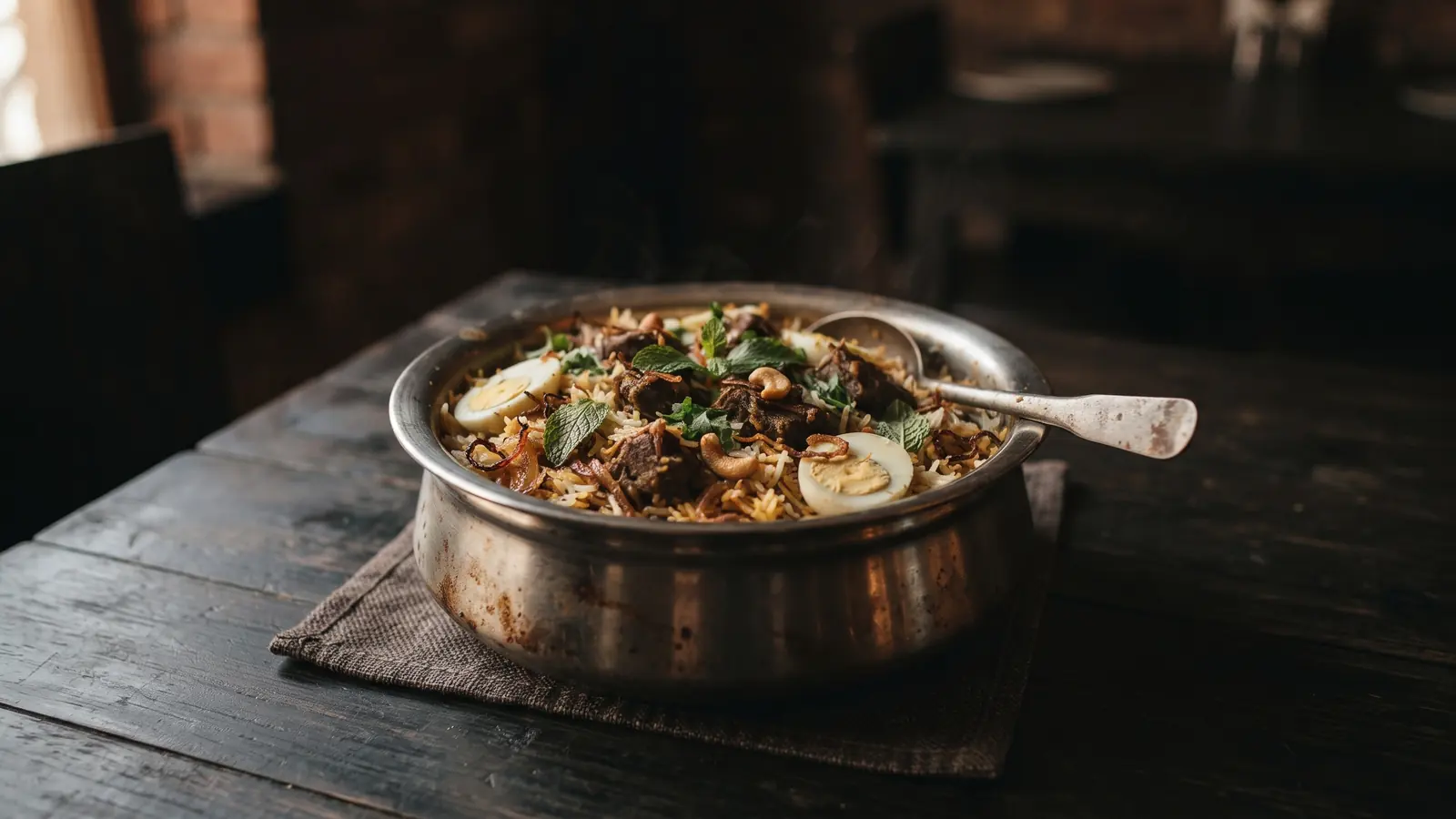
Short answer
A clay biryani pot is an unglazed or lightly glazed earthenware pot used for slow dum cooking. Season it in water before first use, heat it slowly on low flame, and clean it by hand without soap soaking in.
A clay biryani pot is an earthenware vessel used for dum cooking, where layered rice and meat steam slowly under a sealed lid. To use a clay biryani pot, soak and season it first, heat it gradually on low flame, and cool it fully before washing.
What is a clay biryani pot?
A clay biryani pot is a round-bellied cooking pot made of fired clay, often called a handi, matka or mitti ki handi in Hindi and Urdu. It holds heat evenly and releases it slowly, which suits the long, gentle cooking behind dum biryani.
Clay pots can be unglazed, with a plain terracotta interior, or glazed on the inside. Unglazed pots are more porous and need more careful seasoning. Both kinds are used across India, Pakistan and Bangladesh for biryani, curries and slow-cooked dals.
Why do cooks use clay for biryani?
Cooks use clay for biryani because the pot heats slowly and evenly, holds moisture and gives a soft, steady dum. Many cooks also like the faint earthy aroma that clay adds to the rice.
The porous walls absorb some heat and give it back gradually, so the rice is less likely to scorch than in a thin metal pot. The trade-off is fragility and speed. Clay takes longer to come up to temperature and cannot take sudden heat or cold.
How do you season a new clay pot?
Seasoning a clay pot means soaking and slowly heating it so the clay is conditioned and less likely to crack. The usual steps are the same for most unglazed handis, but a maker’s instructions always come first.
- Rinse the pot and soak it fully in clean water for several hours, or overnight.
- Dry it in the shade, not in direct heat.
- Rub a thin film of cooking oil on the inside and outside if your maker advises it.
- Fill the pot two thirds with water, with a spoonful of rice flour or a handful of rice husk if you have it.
- Place it on the lowest flame and bring it slowly to a simmer.
- Let it cool completely before pouring out the water.
Some cooks repeat this once or twice. A glazed pot may need only a water soak and gentle first use.
How do you cook biryani in a clay pot?
Cook biryani in a clay pot by layering marinated meat and parboiled rice, sealing the lid and cooking on a low flame for 45 to 60 minutes. The sealed pot steams the rice in the juices released by the meat.
- Marinate the meat in yogurt and spices for at least two hours.
- Parboil basmati rice until about 70 percent cooked and drain it.
- Spread the meat on the base of the pot and lay the rice over it with fried onions, mint and saffron milk.
- Seal the rim with a rope of wheat dough and set the lid on.
- Warm the pot over the lowest flame, increasing slightly after 10 minutes.
- Cook on low for 45 to 60 minutes, then rest 10 minutes before opening.
Adding a little warm water or stock at the edge, not cold, avoids shocking the clay.
How do you pick a good clay pot?
Pick a clay pot that feels solid, has an even wall, a smooth interior and a lid that sits flat on the rim. Tap the pot gently: a clear ring suggests well-fired clay, while a dull thud can mean a crack or a weak firing.
- Glaze: choose a lead-free glaze that is sold for cooking, or an unglazed food-safe pot. Decorative pots are not made for the stove.
- Size: a 3 to 4 quart handi suits a small family biryani, and 5 to 6 quarts serves a larger group.
- Lid: a snug lid matters more than a pretty one, because the seal holds the steam.
- Base: a flat base sits stably on a flame diffuser or in an oven.
What can you cook in a clay pot besides biryani?
A clay pot suits any slow, moist dish, such as dal, rajma, meat curries, pulao and yogurt-based gravies. Dishes that simmer for a long time benefit most from the even heat.
| Dish | Why clay suits it | Typical heat |
|---|---|---|
| Biryani (dum) | Gentle steam, even heat | Low, long |
| Dal | Slow simmer, soft texture | Low to medium |
| Meat curry | Tenderizes slowly | Low |
| Pulao | Moisture held well | Low |
| Rice pudding or kheer | Steady heat, no scorching | Low |
Avoid fast, high-heat frying in clay, such as deep frying or searing meat, because the pot is not built for rapid temperature swings.
How do you clean and store a clay pot?
Clean a clay pot by hand with warm water and a soft brush, using baking soda or salt for stuck food, then dry it completely before storing. Unglazed clay absorbs soap and smells, so heavy detergent is best avoided.
- Let the pot cool fully before washing.
- Soak a stuck layer in warm water for 20 minutes, then scrub gently.
- Rinse thoroughly and dry upside down in open air.
- Store with the lid slightly ajar so air circulates and mold does not form.
- If a musty smell appears, rinse with water mixed with a little lemon juice or vinegar and dry in the sun.
Wash a glazed pot like any ceramic pot, but still avoid sudden temperature changes.
Clay pot or metal pot: which gives better biryani?
Clay gives a softer, more even dum, while a heavy metal pot is faster, sturdier and easier to manage. Neither is better in every way, and good biryani is made in both.
| Point | Clay pot | Heavy metal pot |
|---|---|---|
| Heat | Slow to start, steady | Quick, needs a griddle to stay gentle |
| Moisture | Walls hold moisture | Depends on the seal |
| Durability | Fragile | Long lasting |
| Care | Hand wash, dry well | Easy |
For a first biryani, many cooks start with metal and move to clay once the layering and timing feel familiar.
Can a clay pot be used on a gas stove, oven or induction?
A clay pot can usually go on a gas flame with a diffuser, in an oven, or on an electric coil, but not directly on induction. Always check the maker’s guidance, because some pots are made for direct flame and others only for ovens.
For gas, a heat diffuser or a flat griddle under the pot spreads the flame and reduces cracking. In an oven, start with the pot in a cold oven and let both heat together. Induction needs magnetic metal, so a clay pot works only with a suitable interface disc approved by the pot’s maker.
Is clay biryani on the Bay Biryanis menu?
Bay Biryanis in Austin lists its biryanis, such as the Hyd Chicken Dum Biryani, as cooked on dum, but its menu does not say whether any dish is cooked in clay pots. This guide therefore makes no claim about the restaurant’s cookware.
If you are curious what dum biryanis are on offer, see the menu page here, or the official website, baybiryani.com. Opening times are on the hours and location page. This guide is independent and takes no orders.
Common questions
Can you use a clay biryani pot on an induction cooktop?
Not directly, because induction needs magnetic metal. Use a heat-safe plate such as an induction-compatible disc underneath if the maker allows it, or cook in the oven. Check the pot’s instructions before heating.
Why did my clay pot crack?
Clay cracks from sudden temperature change, such as a cold pot on a hot flame or cold liquid in a hot pot. Heat slowly from low, add warm liquid, and let it cool fully before washing.
Do you need oil to season a clay pot?
Many makers recommend soaking in water, then rubbing the inside lightly with oil or rice water and warming on low heat. Follow the instructions that came with your pot, since glazed and unglazed pots differ.
Can I use soap on a clay pot?
Unglazed clay is porous and can absorb soap smell, so most cooks scrub with warm water and baking soda or salt. A glazed pot tolerates mild soap. Rinse well and dry fully before storing.
How long does a clay biryani take to cook?
Plan for about 45 to 60 minutes of gentle dum on low heat, once the rice and meat are layered, plus a 10 minute rest. Clay heats slowly, so it takes longer to start than a metal pot.
Everything practical is on the home page: Bay Biryanis hours, menu and directions.
This article is general information from an independent guide, not from Bay Biryanis itself. For the store’s current details see hours and location.