Short answer
To cook basmati rice, rinse until the water runs clear, soak for 20 to 30 minutes, then simmer covered with about 1.5 parts water to 1 part rice for 12 to 15 minutes. Rest it off the heat before fluffing so the grains stay separate.
To cook basmati rice, rinse it until the water runs clear, soak it for 20 to 30 minutes, then simmer it covered with about 1.5 parts water to 1 part rice for 12 to 15 minutes. So how do you cook basmati rice that stays fluffy and separate? Rest it off the heat before fluffing.
What do you need to cook basmati rice?
You need basmati rice, water, a pot with a tight lid, and a pinch of salt. A fork for fluffing finishes the job, and whole spices such as cardamom or bay leaf are optional.
- 1 cup (about 190 g) basmati rice, serving two as a side
- 1.5 cups water (1.25 if soaked and drained)
- 1/2 teaspoon salt
- 1 teaspoon ghee or oil (optional)
- 2 cardamom pods and a bay leaf (optional)
A medium saucepan with a lid that closes well is best. A thin pot can scorch the base before the rice is done.
Why do you rinse and soak basmati rice?
Rinsing removes surface starch so the grains do not clump, and soaking helps them absorb water evenly and stretch without breaking. Both steps are the main reason restaurant basmati looks separate and long.
To rinse, put the rice in a bowl, cover with cold water, swirl, pour off the cloudy water and repeat until the water is mostly clear, usually three or four times. To soak, cover the rinsed rice with fresh water for 20 to 30 minutes, then drain well. Longer soaks, over an hour, can make the grains fragile.
What is the water ratio for basmati rice?
The usual ratio is about 1.5 parts water to 1 part rice for unsoaked basmati, and about 1.25 parts for soaked and drained rice. The exact amount depends on the brand, the age of the rice and the pot.
| Method | Rice | Water | Cooking time |
|---|---|---|---|
| Stovetop, unsoaked | 1 cup | 1.5 cups | 15 to 18 minutes |
| Stovetop, soaked | 1 cup | 1.25 cups | 10 to 12 minutes |
| Rice cooker | 1 cup | 1.25 to 1.5 cups | As per cooker |
| Boiled in plenty of water (biryani style) | 1 cup | 6 to 8 cups | 5 to 7 minutes, then drain |
Older, aged basmati tends to need slightly more water than new rice. Adjust by a few tablespoons after the first try.
How do you cook basmati rice on the stove, step by step?
Cook basmati on the stove by bringing rice and water to a boil, covering the pot, reducing to low and cooking until the water is absorbed, then resting. The method takes about 25 minutes including the soak time of the rice.
- Rinse the rice until the water is mostly clear.
- Soak it for 20 to 30 minutes and drain.
- Place the rice, measured water, salt and optional ghee and spices in the pot.
- Bring to a boil uncovered, then cover tightly and reduce the heat to the lowest setting.
- Cook for 10 to 12 minutes without lifting the lid.
- Turn off the heat and let the pot rest, still covered, for 8 to 10 minutes.
- Fluff gently with a fork, lifting the grains instead of stirring.
The resting step finishes the cooking with steam and lets moisture even out, so skip it only if you are in a hurry.
How do you cook basmati rice for biryani and pulao?
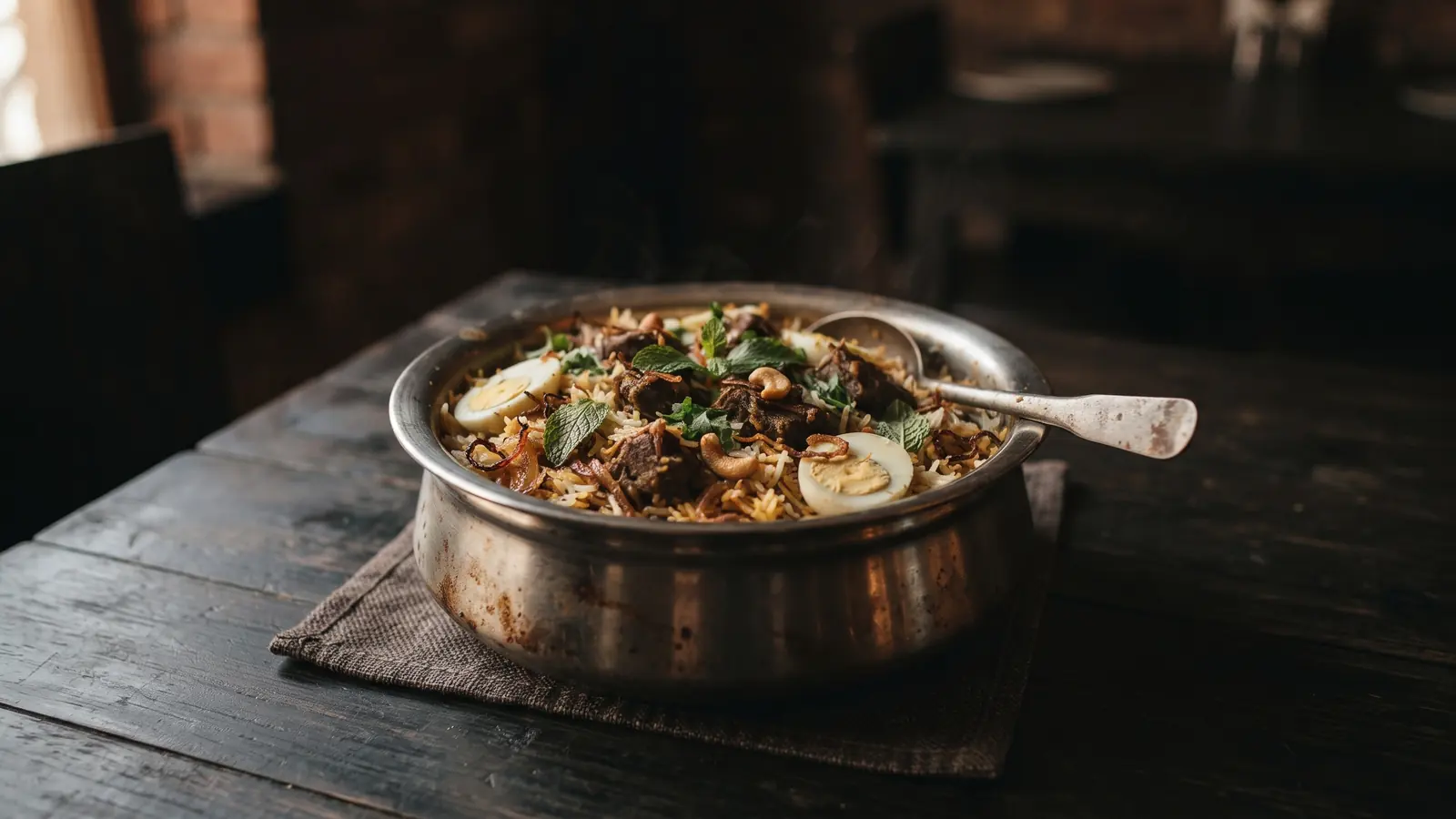
For biryani, basmati is parboiled in salted water until about 70 percent cooked, then drained and layered with meat. For pulao, the rice is toasted in ghee with whole spices and cooked with a measured amount of stock or water.
- Biryani: boil the soaked rice in plenty of salted water with whole spices for 5 to 7 minutes until it breaks easily between the fingers but still has a firm center. Drain, then layer and finish by dum, which is slow steaming in a sealed pot.
- Pulao: fry whole spices and onions in ghee, add rice and toast for a minute, then add water or stock and simmer covered as above.
- Plain rice: cook as in the steps above.
The Bay Biryanis menu lists both styles: biryanis such as the Hyd Chicken Dum Biryani and pulaos such as the Chicken Pachi Mirchi Pulao.
What are the most common basmati rice mistakes?
The most common mistakes are skipping the rinse, using too much water, lifting the lid and stirring the rice. Each of them leaves the grains soft, sticky or broken.
- Too much water: results in mushy, clumped rice. Measure instead of guessing.
- No rinse: surface starch makes the grains stick together.
- Stirring while cooking: breaks the grains and releases starch.
- Lifting the lid: lets steam out and cooks the rice unevenly.
- Skipping the rest: leaves the rice wet on top and firm at the bottom.
- Cooking on high heat: scorches the bottom before the grains finish.
How do you fix mushy or undercooked rice?
Fix undercooked rice by adding a few tablespoons of hot water, covering and steaming on low for 5 more minutes. Fix mushy rice by spreading it on a tray to dry, since it cannot be firmed again.
If the rice is too wet but not collapsed, uncover the pot on low heat for a minute to let moisture escape, then fluff. If it is truly mushy, use it for fried rice or a rice pudding, where a softer grain is fine. Next time, reduce the water by a few tablespoons.
How do you store and reheat cooked basmati rice?
Cool cooked basmati quickly, refrigerate it within an hour or two and use it within a day or so. Reheat it with a splash of water until it is steaming hot throughout.
Spread the rice on a plate to cool faster, then place in a covered container. Reheat in a covered pan with a little water, or in the microwave with a damp paper towel on top. Rice left at room temperature for a long time is not safe to reheat, so do not keep leftovers out.
Where does basmati fit on the Bay Biryanis menu?
Bay Biryanis in Austin lists biryanis and pulaos as rice dishes, but its menu does not say which rice it uses, so this guide does not claim that it is basmati. The restaurant lists many rice dishes, including fried rice in the Indo-Chinese section.
For the full list of rice dishes, see the menu page here or the official website, baybiryani.com. Opening times are on the hours and location page. This guide is independent and takes no orders.
Common questions
Do you have to soak basmati rice?
Soaking is not required but it helps. A 20 to 30 minute soak lets the grains absorb water, so they cook evenly, stay longer and break less. If you skip it, add a little more water and cook slightly longer.
How much water for 1 cup of basmati rice?
Use about 1.5 cups of water per cup of unsoaked basmati, or about 1.25 cups if the rice was soaked and drained. Packages differ, so check yours and adjust slightly after the first batch.
Why is my basmati rice sticky?
Sticky basmati usually means too much water, no rinsing, stirring during cooking or lifting the lid. Rinse well, measure the water, cover tightly, and fluff gently with a fork after resting.
Can I cook basmati rice in a rice cooker?
Yes. Rinse and soak the rice, add water to the cooker’s basmati line or about 1.25 to 1.5 cups per cup of rice, and cook as normal. Let it rest with the lid on before fluffing.
How long does cooked basmati rice keep?
Cooked rice should be cooled quickly and refrigerated within an hour or two, then used within a day or so. Reheat it until steaming hot. Do not leave cooked rice sitting out for long.
This page is part of the independent guide to Bay Biryanis, which has the address, hours and menu.
This article is general information from an independent guide, not from Bay Biryanis itself. For the store’s current details see hours and location.